I’m on my way home!
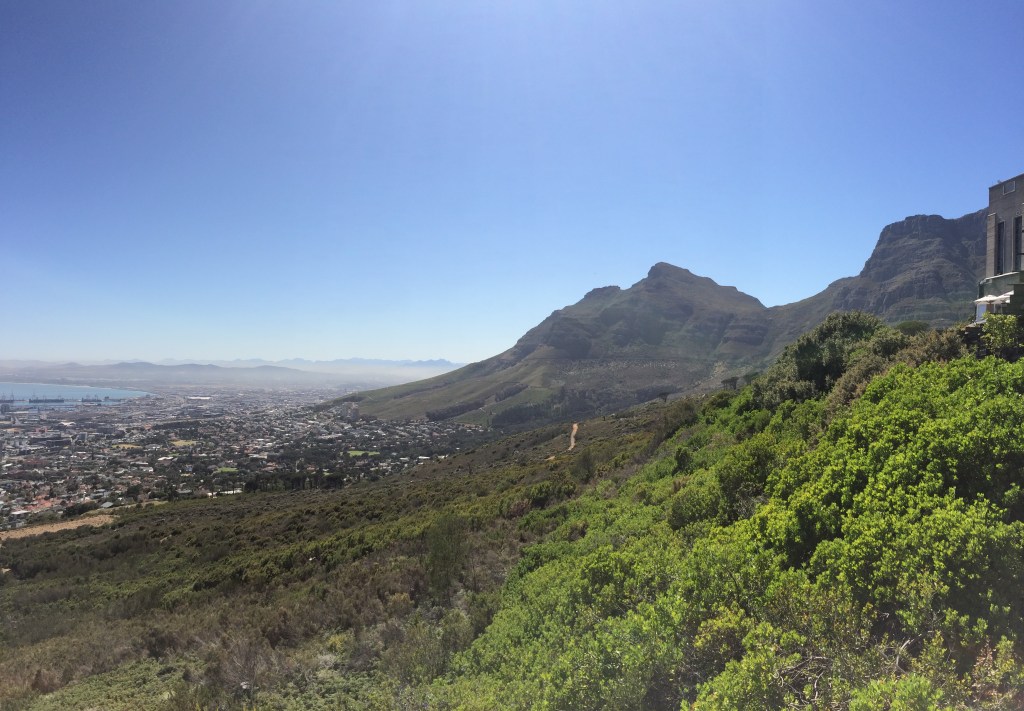
My first version of that sentence was: “One week to go!” Then it was: “Three days to go!” And now, I’m on a plane after spending a week in Capetown on a small vacation to close my program. While the goal-setter in me wishes I could’ve gotten this post done sooner, I know that I spent my last week in South Africa how I needed to—with friends, on hikes, seeing new places, meeting new people. When I think about it, that’s what the typical week has been like throughout the past months, and I’m so grateful for that.
…
I’m left with the cliché “I can’t believe time has flown this fast” feeling. Feeling that stereotypical shock is tough, not just because of the surprise, but because I don’t want any part of my experience to be defined by stereotype. It feels too special, too unique.
It is those things, and it’s not. More students are coming in January to do this SIT program. More privileged, well-meaning, American college kids are going to come into these township homes and be touched by the warmth they radiate. I’m just one of them. More curious people my age are going to show up, do research, and conduct interviews that people participate in out of the kindness of their hearts. I’m just one of them. I feel so much gratitude, and also a fair amount of heaviness since I’ve surely taken more than I’ve given while I’ve been here.
However, that’s the way it works. We don’t go abroad to change the world, we go abroad to be changed. If you’ve got those priorities flipped (hello, mission trip/voluntourism enthusiasts), there’s a good chance you’re missing something. South Africa and her people do need change. While that’s undeniable, the solutions aren’t going to come from a gal in undergrad, and certainly not from the white, capitalistic West.
Yes, I believe my research has the power to be impactful, but my participants are the ones with the real power. It’s relevant, it’s important, it’s interesting because of them. As I keep working on it, and hopefully publishing it somehow, I want to keep in mind the difference between my benefit and theirs. In academia—and especially this undergrad study that they honestly didn’t get anything but a conversation out of—that’s tricky. I don’t want to take voices away, I want to amplify them. It reminds me a lot about what good ally-ship means, especially given that I’ve been a white American doing research in Africa.
We don’t go abroad to change the world, we go abroad to be changed. I think that idea is going to impact the way I travel for the rest of my life. Before this trip, I considered myself to be a good traveler. I love to plan, and I’m an all-in adventurer. However, that’s not all there is. Listening, openness, spontaneity. Diving in as deep as you can. Seeking out places based on more than just pretty tourist destinations. Capetown, by the way, is 100% a pretty tourist destination. It’s like I was in Europe (howdy, colonization and white wealth), on an entirely different continent than Durban. While it was gorgeous, I missed Durban’s slower pace, it’s authenticity. I missed feeling like I was actually in Africa, and I’m so glad I spent my semester where I did.
…
Realistically, arriving in Capetown was like phase one of “goodbye.” And now I’m on a plane, and the band-aid is being ripped off. It doesn’t feel real, and I’m still trying to figure out how to say goodbye to a place that I’ve already left.
This is, so far, what I’ve come up with: The best way to say goodbye is not to.
By that, I mean I want to take as much as I can with me. Stories, lessons, new habits. Things I’ve learned about myself, personal work breaking apart biases and mental health road blocks. And in thinking about what I’m bringing home, what am I letting go of once I get there? All the clothes in my closet I’ve gotten on just fine without these past few months need to be reassessed with a critical eye. Cutting meat out of my diet again is going to be AMAZING. And not just stuff—the mental energy I spend on “first world” things back home that I don’t need to. (Sounds cliché but it’s true.)
I think thoughts and feelings about racism are going to be a cornerstone of my transition back to home. I’m leaving a country that makes a habit of mistrusting whiteness, and re-entering one that generally runs from that. So many of my spaces at home are white—my choir, my classes, my clubs, my neighborhood, my family, my job(s). I’ve learned the importance of automatically questioning that whiteness in South Africa. It’s so clearly linked to oppression that you can’t ignore it, you can’t argue it. At all. Even in this “miracle nation” country that “beat racism” and won with democracy, you might ask? …well, it hasn’t been a victory after all. Structural discrimination at home is more hidden, more disguised. You maybe don’t see it unless you care to pay attention, and not enough people do. I can feel myself getting frustrated by that already.
A list of some things I am expecting of myself:
Feeling small, feeling guilty, feeling detached.
Feeling frustrated by all the waste we make in the US, feeling upset when people make generalizations about Africa.
Feeling loved, feeling supported by those welcoming me home, feeling happy to hug my nieces.
Feeling like it’s impossible to really explain my experience to anyone.
Feeling lucky, feeling grateful, feeling opened-up.
Feeling confused, feeling like making changes in my life, feeling like making change in general.
Feeling like talking about racism and inequality a lot, feeling angry.
Feeling drawn to research that’s meaningful and accessible.
Feeling tired, feeling happy to eat my dad’s food.
Ngiyabonga. Thank you, thank you, thank you. To those who make up my community in SA and to those who have my back at home. I’m excited to give out hugs, and I’m excited to be processing all of this stuff—it means I have a lot to be grateful for.
 Isabel's Semester in South Africa Fall '19