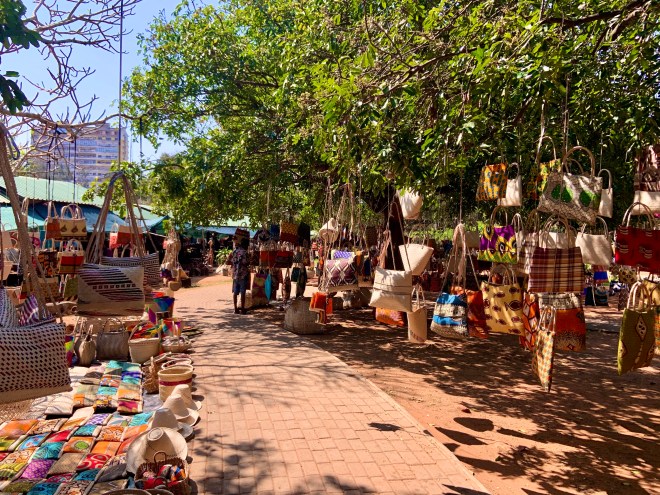
This past week my program went to visit the country of Mozambique, which borders South Africa to the northeast.
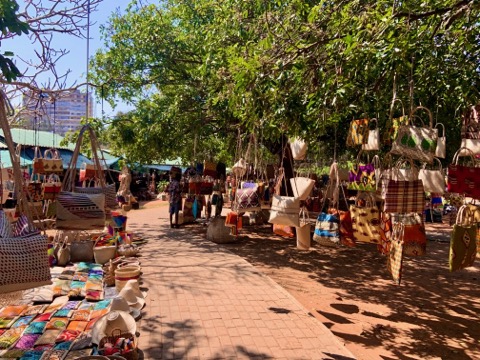
Some history for you. Mozambique was colonized by Portugal in 1505 and liberated until 1975. Essentially, Portugal was among both the first and last to decolonize. This means that there’s a really unexpected (for us Americans, anyway), dynamic Afro-Latino culture in Mozambique. The country’s economy is based on agriculture, tourism, and gas. The last of those, in particular, is only benefitting elites. The country is arguably a failed state—it’s really indebted to the World Bank and the IMF. Frelimo is Mozambique’s liberation-movement-turned-majority-political-party—like the ANC in South Africa. Civil War raged in Mozambique form 1977-1992 as Renamo, a militant rebel movement, tried to destabilize the country. Guess who funded it and gave it weapons? Apartheid. Guess who else? The United States. Working together. In 1986, the first president of Mozambique, Samora Machel, was killed when the South African secret service sabotaged his plan over South African airspace. Mozambique remained a fierce ally of the ANC, with understandable personal investment in the struggle given apartheid’s violation of its sovereignty.
Among the many similarities between Mozambique and South Africa is that the United States was really shitty to both countries. Renamo, which still has a presence in the bush in Mozambique, killed approximately one million people during the Civil War. At the time, about 16 million people lived in Mozambique. If you’re doing the math, the United States worked with apartheid to help kill 6.25% of the population of Mozambique. Why? Frelimo, like the ANC, was rooted in Marxist ideology like many liberation movements throughout our world’s history trying to escape imperialism. Remember, Marxism is different from communism and socialism. It’s been very obvious to me how Americans are conditioned to view all of these as one and the same, and to view them very negatively regardless of context. Plus, the United States just doesn’t like to give black African people a chance to run their own governments. It’s been a shameful experience to learn about our disgraceful involvement in Mozambique’s bloody civil war, in particular.
I could tell I was in a different country when we were in Maputo. There was a livelier, warmer energy about Maputo. People seemed to smile more. After trying to learn Zulu, seeing the latin roots of Portugese words everywhere even felt a bit comforting. It was busy, and a contrast to Durban’s more laid-back beach town vibes. Durban bears the marks of organized British rule, while Maputo felt more chaotic to me. It was more run-down and underdeveloped as well. It was great to be able to travel to another African country and make these kinds of observations.
The main purpose of the trip was to learn more about Mozambique’s role in the ANC’s struggle.
One of our main stops was at the University of Eduardo Mondlane to see where Ruth First was bombed and murdered by the apartheid government. Ruth First was a part of the ANC, a researcher with the Africana Studies department, and was the wife of Joe Slovo, the head of the ANC’s militia. We spoke to retired professor Yussuf Adam who was there the day she was killed, and he told us the story of how the letter bomb exploded in her office where she and other colleagues were engaged in discussion. We stood in the office, too. It’s not memorialized in any way, just tidied up and repainted. You’d never guess someone was murdered by apartheid in that room. Yussuf is very critical of South Africa’s past and present treatment of its neighbor countries. He told us that after the ANC had won, a friend asked him if he thought helping the ANC was worth it. He said no. Mozambique sacrificed so much. Eventually, he said, he believed it was worth it since “you have to change the world, you have to make it a better world.”
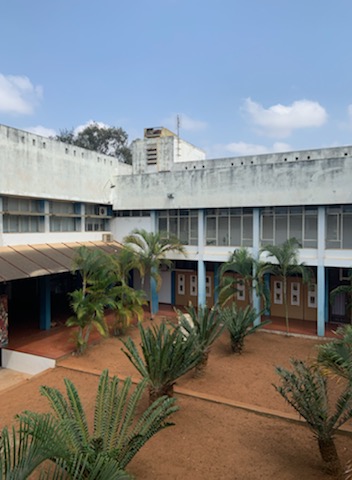
Africana Studies building courtyard at EMU 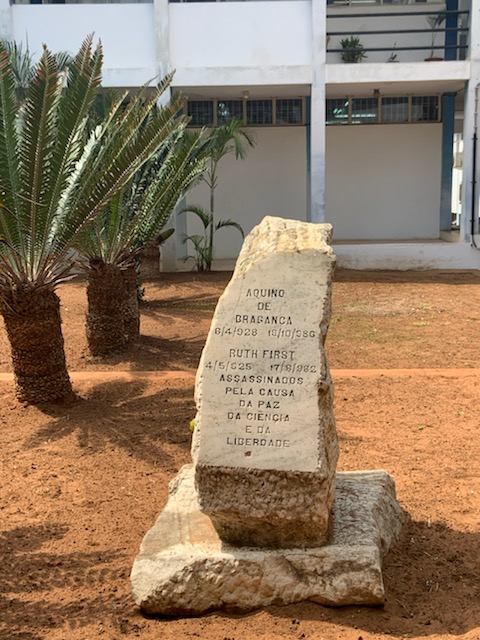
Ruth First Memorial at EMU
Before we went to Mozambique, we got the chance to chat with someone who has been a part of a lot of change: Albie Sachs. He’s considered to be the father of South Africa’s constitution, so a pretty big deal. He’s a good example of radical white allyship in many ways: he participated in the ANC’s protests and demonstrations; he became a lawyer and defended revolutionaries in court against the apartheid regime; apartheid arrested him and held him in solitary confinement many times; he was exiled from the country and lost his arm when the government tried and failed to assassinate him; his work gave the ANC an upper hand in the negotiations that ended apartheid; and he guided the creation of the Constitution and its Bill of Rights (the most progressive in the world) and served as a Justice on South Africa’s Constitutional Court. He spent much of his time in exile in Mozambique, playing a large role in the ANC’s underground there. He loves the country, and gave us an introduction to the city of Maputo where we would be staying. When we got to ask him questions, he condemned the recent xenophobic violence, speaking from personal experience with the hospitality and sacrifice of Mozambique in South Africa’s struggle. It was fascinating!
I have to give another big props to SIT—we have the craziest connections. My program director is a personal friend of Albie, which is how we got fit into his busy schedule. And Albie Sachs isn’t the only “big deal” person my program has met so far. Around week two, we visited Mac Maharaj at an exhibition he curates about the history of the apartheid struggle in Durban.
Mac Maharaj was imprisoned on Robben Island with Mandela. Mac told us about the political debates that sustained the ANC leaders throughout that time, and how the nation’s path to freedom was forged in the conversations they had between harsh abuse and hard labor. Mac also copied—by hand—Mandela’s book, Long Walk to Freedom, and smuggled it out of prison. Mandela’s own copy was discovered by prison guards, so Long Walk to Freedom’s publication would not have happened if not for Mac. My favorite thing about Mac was that he wasn’t interested in our thanks or our praise—he only wanted critical, important questions. (We did our best to deliver as political nerds, but I think our star-struck-ness got in the way a bit.)
Honestly, it really doesn’t feel like I’m in school—it feels more like I’m on an incredibly fascinating and nerdy vacation. (We’ll see if that changes when I start working on my very long research paper.) I moved in with my second host family in the suburb of Newlands yesterday. Time for more adjustment and new relationships.
Hamba Kahle (that means “Go well” in Zulu),
Isa
 Isabel's Semester in South Africa Fall '19
Hamba Kahle 💛💛
LikeLiked by 1 person
I love that you are sharing your learning!! I learned something new…. Portuguese in Africa.
LikeLiked by 1 person
Thanks for reading!!
LikeLike