Greetings!
The past week or so has flown by!
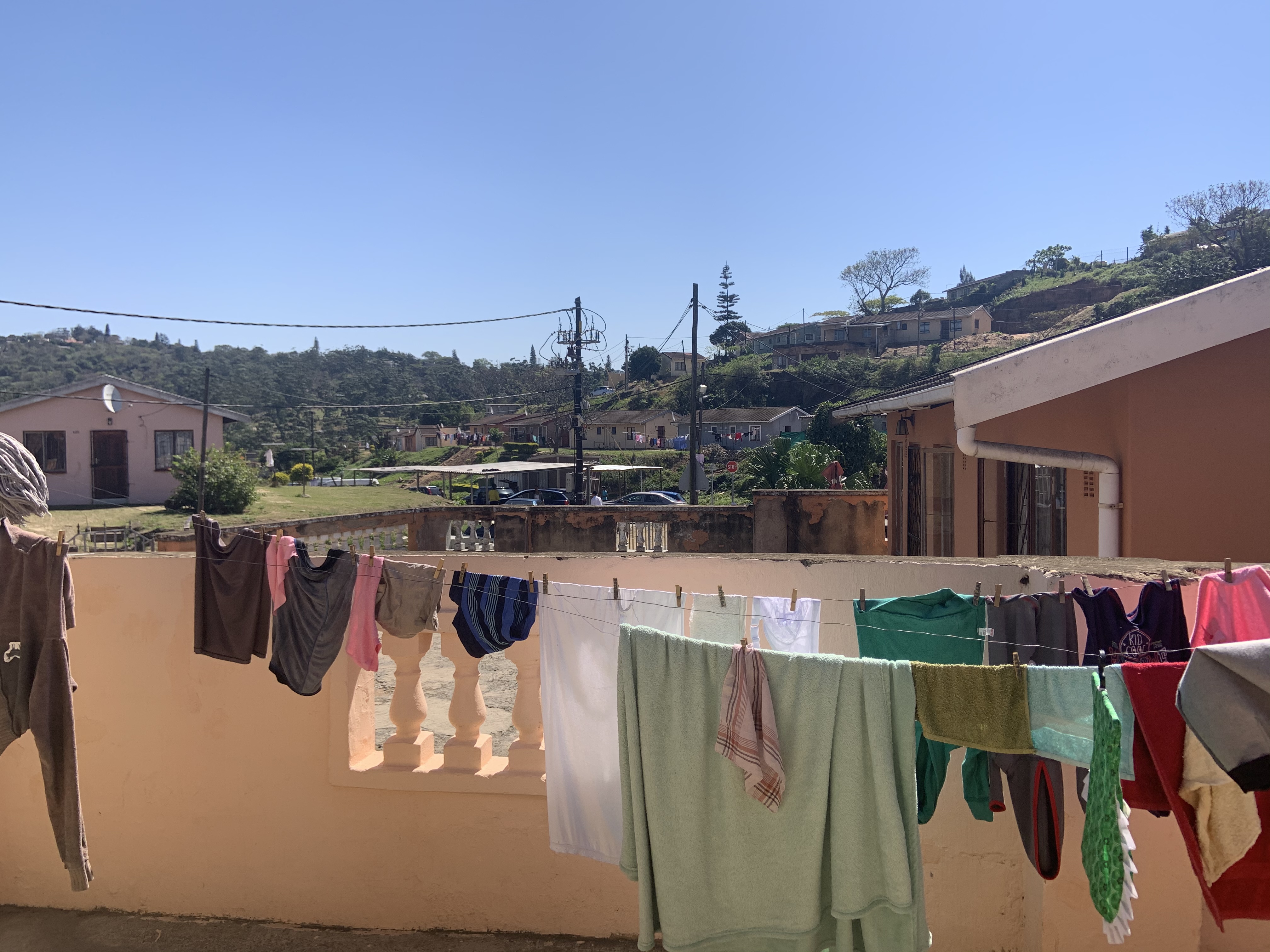
I’m definitely feeling more comfortable in Durban. I know a bit more about where different neighborhoods are, and can handle small greetings and conversations in Zulu. I’m noticing that belonging comes from the little things. Mama puts her hand on my arm when she talks to me. I recognize the little kids in the neighborhood when they wave at me. Gogo laughs at me more, and we have inside jokes now. My little sister insists I feed her meals. (Mama and Gogo told me they are worried they won’t be able to get her to eat when I’m gone, so we had to have this whole talk about how she’s gonna be a strong woman when she grows up, and she’s gotta eat so she can be strong!)
These little things mean a lot to me because my Mama’s household is very traditional. She’s a provider, and being a good host is very important to her. I mentioned in my last post her reluctance to let me help with meals, and that sort of thing applies across the board when I’m at home. It’s gracious and welcoming, and could in many ways be considered the ideal situation. However, it’s been one of the most difficult things about my experience. Mama wants to iron all my clothes for me. She also sets my plate at the kitchen table for meals, and makes me serve myself first before everyone else. She instructs me to sit at the table and start eating while she serves up plates for the rest of the family, who all sit on couches in the living room (adjacent to the kitchen). She also doesn’t allow the little kids to be around me when I’m eating—she doesn’t want them to disturb me. All this can feel strange sometimes. Even though it’s well-intentioned, it feels like a very physical manifestation of the privileged/white/American divide I’ve been trying to be very conscious of and eliminate. I’ve also been raised to be as helpful as possible, so I’ve often got my mom’s silent “get up off your butt” look in my mind. I try to find a compromise by always at least offering to help or do things for myself. I don’t need to be treated differently, but I also want to respect my Mama’s wishes. It’s a balance.
Now my time in Cato Manor is up, and the program is in Mozambique for the next four/five days. In some ways, it feels like I’ve gotten more comfortable just in time to pull up roots and head into something new again. This is another reason SIT is going to push me out of my comfort zone a bit, since the homestays are just long enough for you to bring with your family before you leave. And that’s okay— this whole experience is all about getting a variety of real experiences! It’s definitely helped me confirm that I’m pretty much what you’d describe as a “nester.” I like making new places cozy and familiar, and I enjoy sticking with them for a while. Nesters sometimes get a bad rep, which I don’t think is entirely fair, at least for me. I don’t think it makes me unadventurous (I love planning trips and seeing new places), but rather pulls me toward having authentic and immersive experiences where I feel a part of the place I’m in. Study abroad could maybe be described as a continual attempt to “nest” in a different country and cultural context.
You may or may not have heard on the news recently about unrest in South Africa. (Let me know if you have, I’m interested to know!) The past week has been a really tense time in South Africa for multiple reasons. At the end of my last post I mentioned the xenophobic attacks occurring in Johannesburg (about 6 hours away from me). South African truck drivers have been attacking foreign national truck drivers from other African countries— using petrol bombs and torching their cars, stabbing, stoning, shooting— and have killed over 200 drivers. They are targeting the foreign nationals because unemployment is high (about 26%) and there is fear/anger about non-native South Africans “stealing jobs.” This violence fed into looting and destruction of street shops owned by foreign nationals and other chain businesses in Johannesburg. Also, the roads to Johannesburg from Durban haven’t been safe due to the torching of vehicles. There have been a couple incidents of violence in Durban itself, but not in areas I live or go to school in.
The attacks are distressing and shameful for many people, not just because of the violence but because of South Africa’s history and relationship with neighboring countries. The struggle against apartheid was not just South Africa’s alone— Mozambique, Namibia, and many others played a significant role since the MK (the ANC’s militia) was assembled, trained, and organized outside South African borders when the ANC was banned. These other countries practiced what I’d consider to be radical allyship— dedicating and sometimes losing their lives to dismantle apartheid. To many outside South Africa, the liberation symbolized the true end of colonial rule in the region, and a true expression of strength and unity. Now that South Africa is an economic leader on the continent people head there seeking economic prosperity, and unity isn’t what they find. Unfortunately, socio-economic inequality (SA is the most unequal country in the world) and pressures of unemployment seem to have made it easy for South Africans to forget who their friends are.
Here’s an article I’ve read if you’d like to read more about the attacks: https://www.thecitizen.co.tz/news/1840386-5250500-x6xv16/index.html
A second source of unrest in the country has been extreme gendered violence. I took an Intimate Violence course last semester and focused my final paper on the prevalence of rape in South Africa and the connection to post-apartheid social structures. It’s been really intense and, frankly, scary to see what I was researching lived out in front of me. Here’s what I mean: South Africa is a rape culture. There are very, very few consequences men who assault women in any capacity because the justice system is incredibly incompetent at all levels. Apartheid restricted black women to the home and inherently controlled their social roles. When apartheid ended, men lost a lot of power, and not just white men. Meanwhile, the government has been almost entirely focused on rectifying issues of racialized inequality, not issues of gender violence or inequality. It’s a hard place to be a woman.
*Trigger warning for rape/sexual assault*
Recent highly publicized cases include a college student who entered a post office and was raped and murdered in the building, among others. A girl was kidnapped, raped, murdered and left on her mother’s front doorstep. This brings up another quote my research: “assault is just a fact of life for South African women.” It’s of course not always extreme, but it’s inevitable. Being here, that seems very real after some comparatively minor but unfortunate interactions with men when I’ve been out with my friends. The country has hurdled itself into its own #MeToo movement, known by the hashtag #AmINext. Asking the question “Am I next?” in light of the murders of women and children recently feels Women are outraged. Earlier this week the president made a statement condemning the gendered violence and called it a “war against the women of our country.” He urged men to act, calling the recent violence “a man’s problem.” While this was refreshing to hear, particularly as an American whose own president makes light of assaulting women, I’m unsure whether his call to action is going to result in any real change.
That was a lot! If any of that worried you, please know I’m safe, I’m smart, and my program is very cautious. Here’s a few lighter/more brief observations I’ve had over the past week:
• A cup of coffee is really just a ticket good for a seat and mediocre Wi-Fi for a few hours.
• My program has co-opted SIT’s “experiential learning” slogan to jokingly describe mishaps we encounter along the way. (Albion people, this is like the SIT equivalent of “the Albion advantage.)
• If you’re an American in a foreign country that speaks little English and are visiting a produce market, people will open up to you more if your group tries to eat their hot peppers and ends up looking foolish.
The next post will be all about Mozambique!! Thanks for reading,
Isabel
 Isabel's Semester in South Africa Fall '19