My rural homestay was the hardest and most powerful part of my abroad experience so far. For one week I stayed in Dokodweni, a rural community about two and a half hours north of Durban. I knew going in that it would be powerful. It’s the kind of raw experience I signed up for when I chose to participate in an SIT program. I was expecting it to be impactful, I just didn’t know exactly how. This is my post from when I was there, with a mix of journal entries and reflection.
I felt very far away from the rest of the world, and that was beautiful.
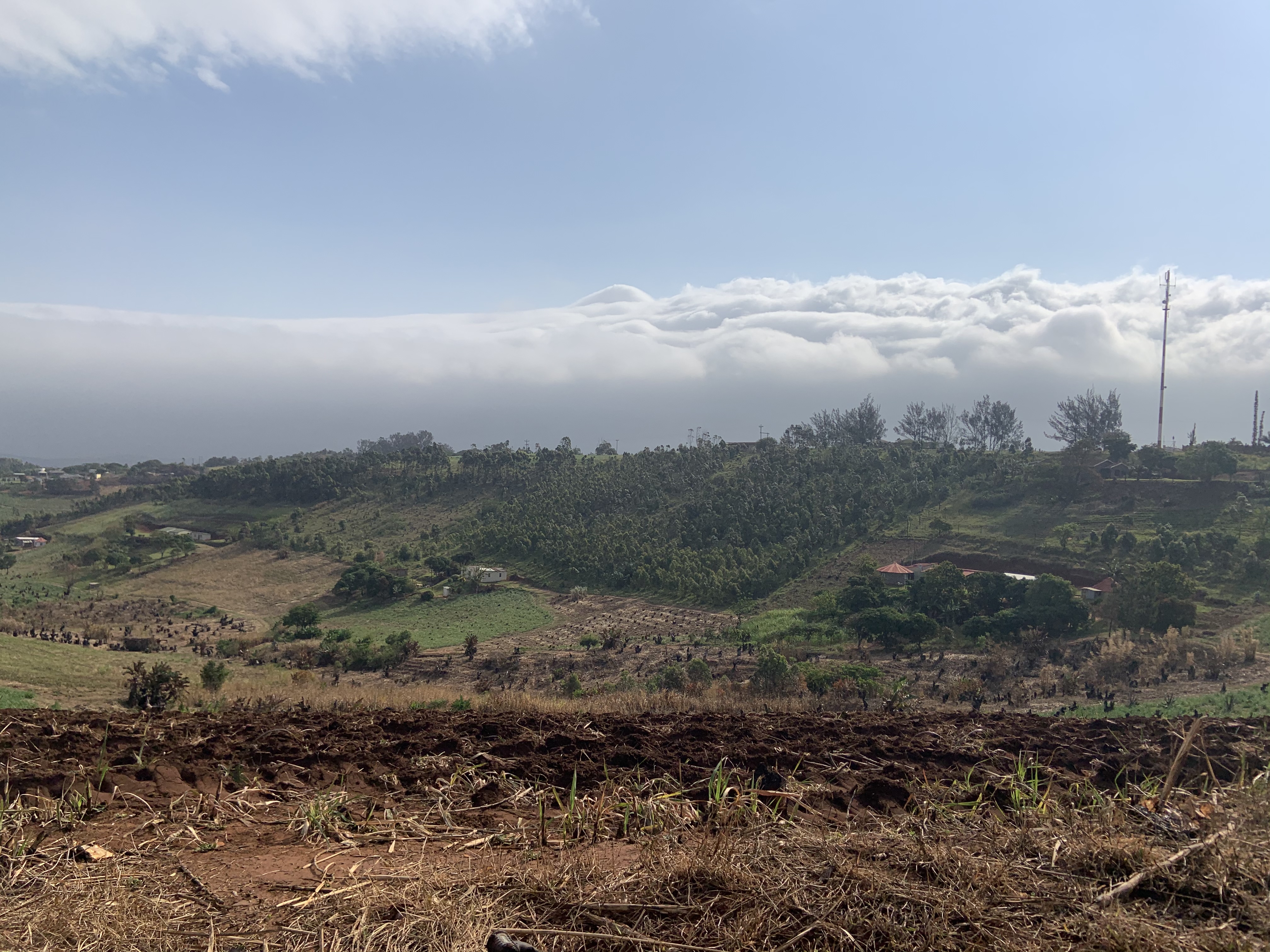
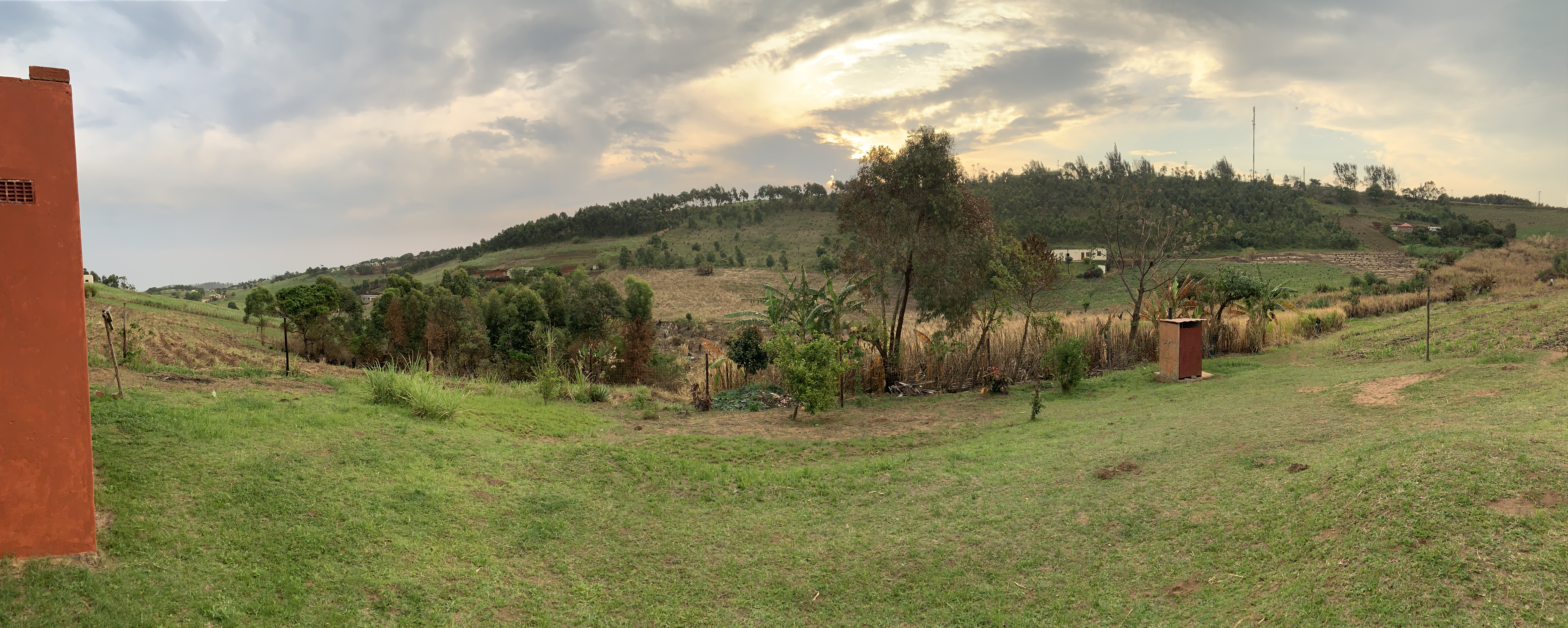
Dokodweni is a hilly area, with fields and fields of sugarcane sloping up and down in between small tin roof houses that dot the landscape. My family’s house is one of those, nestled into a small valley. It smells like fresh dirt and the sea. If you walk up the dirt path—all the earth was an amazing rutsty orange color—that leads down into the valley to my house, you can see the ocean from the top! It’s quiet, save for the babbles of the 7 little kids in my home and the occasional yell across the valley to another farmer. Neighbors really communicate like that because the sound cuts across the still valley so clearly. Unless it rains, the valley smells like smoke every day in the afternoon— a sweet kind of campfire smoke that makes you smile. It happens like clockwork because sugarcane has to be burned as a part of its transformation into sugar. It gets dark at six at night, and there isn’t a light outside for miles around. The darkness comes rapidly, covering everything in a thick blanket and ushering everything to sleep.
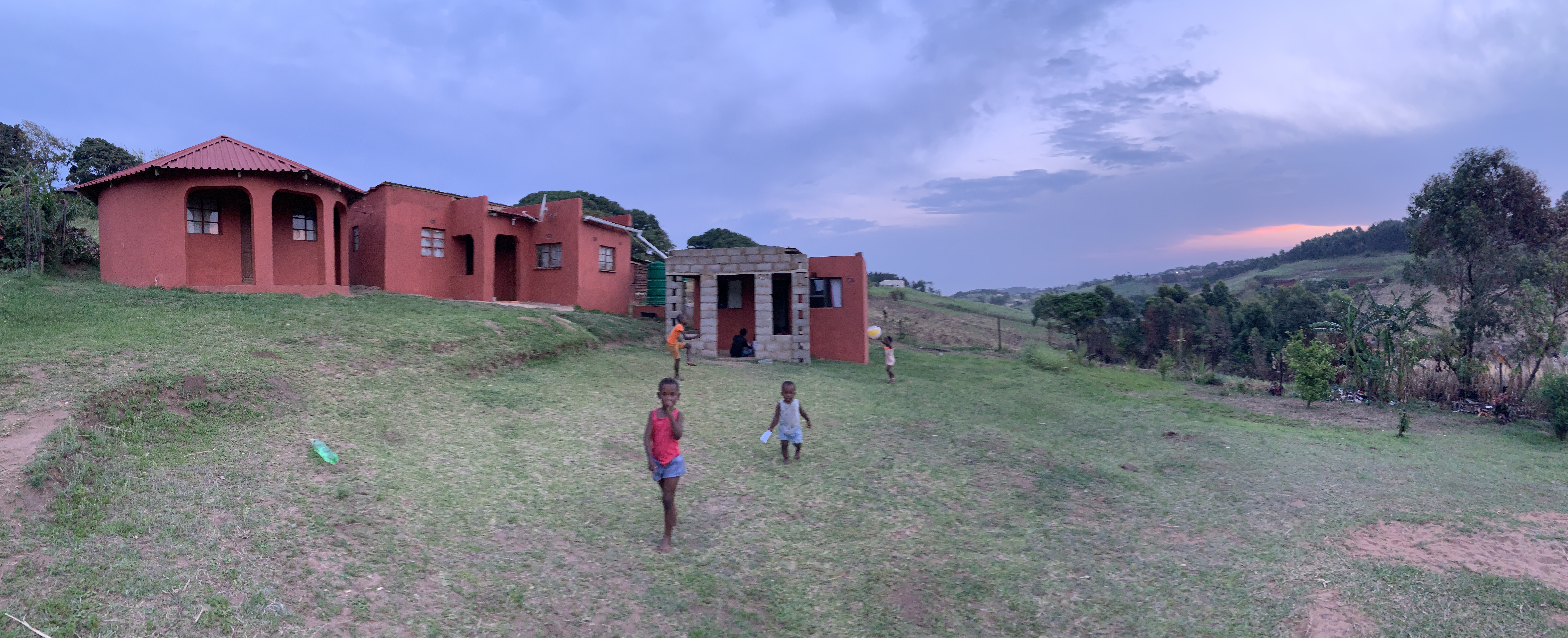
Somehow even though I am the farthest removed from my norm that I’ve ever been, bonding and building relationships happened immediately and openly in a way I haven’t experienced in any of my prior homestays. There wasn’t a waiting period: I arrived, I was welcome, I was theirs. When they help me with Zulu words and sentences, there’s a special joyfulness and understanding about them. They’re determined to help, and they laugh without teasing me Zulu is hard! And I barely know anything, really. But learning more of it is exciting when everyone wants to teach me. And I mean everyone— all the kids: the five-year-olds (twins), the seven-year-old, the ten-year-old, and the sixteen-year-old, plus my twenty three-year-old sister and my mom, who the family calls granny. Even the two babies would if they could. Granny doesn’t speak much English so she can’t explain what phrases she’s teaching me to say, but that doesn’t stop her from making sure I pronounce everything correctly.
Maybe you’re thinking “wow, that was a lot of kids Isa just mentioned.” It is! My older sister takes care of all of them, and only one of them is hers. The parents—her siblings, mostly— are all working in Durban to make money to support their families. She’s a force. She looks after all the little kids, cooks all the meals, and essentially acts as head of the household. (Granny isn’t as up to all that anymore.) It takes a lot of sacrifice to do what she does. And a lot of love.
I felt very far away from the rest of the world, and that was insightful.
Having conversations about politics in Dokodweni was really interesting. Usually people mention Trump, ask me very neutrally what I think of him, express relief when I say I don’t like him, call him ____ (several options I’ve heard: racist, hateful, white supremacist, etc …he is an international symbol of those things) and say some version of “he’s maybe a good businessman, but not for us.” Many people reference a concrete change they’ve seen in their country—something to do with trade disadvantage, or the devaluation of the South African rand (the national currency)—since Trump has been president. As I’m having these conversations, I’m also keeping track of the debates going on back home and all the hubbub about the 2020 election. Something to think about: the power of your vote reaches all the way across the world, to this family in a valley full of sugarcane, carrying buckets of water down the hill to boil over a wood fire for bathing. It might not seem like your same world, and it’s hard to picture it from where you are, but it is. The power of your vote reaches all the way across the world, to places and people affected by our country’s policies who don’t have a say. As a U.S. citizen, you are a global citizen. In this ever-globalizing world, maybe it’s time to vote like one.
I felt very far away from the rest of the world, and that was difficult.
Much of the food is delicious, but all meat at meals is room temperature since the cooking for dinner is done before the kids get home from school. The fridge is too small, so it sits out. As a vegetarian-turned-meat-eater on this trip, that gets hard to swallow sometimes. Bathing from a bucket is hard. Showers are a blessing. Toilet paper is a blessing (I brought mine with me). Running water and being able to wash your hands is a blessing. Time also feels empty “on the farm.” My older sister talked to me about how hard it was to feel isolated out there with nothing to do except sit, watch the kids, and maybe drink. The kids, too, are youngsters yearning for activity that, for the most part, isn’t there.
My friend from my program, Quyn, was living with me up until she got very sick and had to go back to Durban. It was another level of isolation to be alone in the homestay, and while I was a bit nervous about that, I think it really enhanced my immersive experience. I think that’s the way with most of the harder parts of this: it’s the navigation through them that touches you the deepest. I helped cook and I appreciated vegetables even more than I already do. I learned what it’s like to love hot water in a way you only love hot water when it doesn’t come out of a faucet and smells likes a campfire instead. I found solace in hand sanitizer, and that was okay. I had dance parties in the yard with the little kiddos to burn off some of their bouncy energy. They wheel out a big speaker into the yard and blast music that echoes across the little valley. They schooled me with their moves, and loved the ballet moves I taught them. In those moments, I felt very far away from the rest of the world, and a part of something good.
-Isa
——————————————-
I’ve been debating about whether to include this or not. I decided to do it, but the post ends well where it just did, so I’m including this bit here instead. A little epilogue, I guess. If I gave it a title, which I’ll admit seems a little unnecessary, it’d be this:
“What about you?”
On my last night, I was upset. I laid in bed, looking up at one of the cute little lizards that crawled across the walls of my room, and felt something I wasn’t expecting to feel that week: anger. Earlier that night, I’d been rushed inside by Granny with all the little kids. My sister kept them quiet, the two boys (10 & 16) helped push the furniture in front of the door, and my mom pulled the curtains and put pillows in front of them. I was sitting pretty still watching all of this from the couch, and I asked what was going on. She said that there was a crazy, bad man coming down the hill and he was trying to get in the house hurt us. I couldn’t understand much of what she was saying, but the large, machete-like blades she and the two boys were holding and the intense look in her eyes and the violent gestures she made to depict her words in Zulu were enough. At one point she pointed at me, pointed down the hill, and made a fast running motion in place. I stayed on the couch for an hour or so, fairly tense, wondering at how this all seemed so routine to them. I’d been playing ninja with my little ten-year-old cousin, and now he was sharpening these long knives, doing ninja moves, and getting ready to help Granny patrol the yard to make sure we and the house were safe. It wasn’t a game. He looked proud to be protecting me, and kept asking me if I was scared. I wanted to ask, “aren’t you?” But I didn’t. It felt like I should be protecting him instead. They didn’t see anything on the patrol, and aside from an unexplained loud thud on the front door, nothing happened. The boys slept in the second bed in my room that night, and they told me that things like that just happenMy little protectors wanted the light to be left on when they were falling asleep.
It was when they finally fell asleep across the room from me— the light was on and that’s how I could see the lizard— that I felt the anger. It wasn’t at my family, or because I’d maybe been unsafe. It was because I would be able to leave the next morning, and they wouldn’t. Because I knew I wouldn’t have to go through that again, and maybe they would. Because I hadn’t had a “I’m ready for this week to be done” moment until that point, but now I was, and that felt like a betrayal of sorts. And most of all, I was angry thinking about all the things back home people get irritated by, all the things we complain about, all the small things we care about that we make seem much bigger than they are. Your WiFi is slow? Your car is making that weird noise again? Your amazon package delivered in three days, not two? Tough. That’s really tough. I saw myself, my family, my friends in those small fits of privileged frustration, and I felt sick. In those moments, there are people in the world whose primary, daily concerns are simply the safety and well-being of themselves and the people they love. It makes me wonder: when did that stop being enough for us? For me? Even now, back in Durban, four of my classmates and I are struggling to get the washing machine in our new apartment to stop dripping water out of it. You’d think the whole damn apartment was sitting in a foot of water! Laying in my bed back in rural, I felt guilty. I’ve been catching myself lately, reflecting, and feeling guilty then, too.
Part of the reason I didn’t feel I could fit this in with the rest of the post is that I don’t want it to define or change the week I had with them. That’s why I questioned including it at all. The thing is, they kept me safe. It’s not my family’s fault that that sort of threat is a part of their life. Those heart wrenching ninja moves and nonchalant shrugs in the face of potential violence against a household of women and small children… I’m going to be thinking about those for a long time. And if they handled that with so much grace, I better be able to deal with a pesky washing machine. What about you?
 Isabel's Semester in South Africa Fall '19