We’re in the final stages of the program now, somehow! That means that I don’t have any classes anymore, and all my time is spent on my independent study project. This was a huge draw to SIT for me since it meant that I could conduct my own research and turn it into my thesis when I got home.
Four of my classmates have left Durban for internships in Capetown, and the six of us in Durban still are either doing internships or ISPs like me. We’re out of homestays and have our own apartment close to the beach. It’s really nice to have some familiar, college-student independence back. The apartment is in a really nice, developed (gentrified) neighborhood. While it’s quiet and basically everything we need, something about being here always feels… sticky.
Living in this cookie-cutter, wealthy area feels disingenuous and forced compared to the cramped, tight-knit, energized townships. The quiet sounds too quiet without the kids on the corner or the bumping music from the local tavern down the street. It doesn’t feel real. Am I “faking it” here? Have I stopped immersing myself? Am I just a tourist? The answer to those most often feels like… yes? I really appreciate not living in an apartment or a dorm since I’ve arrived now that I’m noticing the difference between my homestays and life in this fancy waterfront apartment district. The adjustment from one to the other is quite intentional, though. I have to have my own space and independence when I’m working on my research project. It’s always good to stay mindful, but I also won’t let that derail my actual goal now. So all stickiness aside, I’m getting PUMPED for my research things!
I’ve been wanting to do this for a couple years now, and it’s finally here! That’s a little freaky, too, especially with the added pressure of my thesis looming on the horizon once I get back to the States. I also just submitted my title and abstract to present my research at the North Central Sociological Association conference in the spring.
I turned in a formal proposal to get approval for my project, so I figured I’d use bits of that for this blog post to give a bit more information about my research plans:
Background of my study
New waves of protest and unconventional activism have arisen around the globe in the past decade, in what some have called a global protest wave (Kaldor et al. 2012). South Africa’s own measurable uptick in protest began in 2004 (Roberts), ten years after the brutally racist and oppressive apartheid regime in South Africa ended, giving way to democracy and the control of the revolution’s party, the African National Congress (ANC). The country’s Constitution guarantees an incredible list of human rights to its citizens in its Bill of Rights, among those the right to work and various social, educational, and welfare rights, the latter of which are intended to be “progressively expanding.” Despite this, South Africa is the most unequal country in the world (World Bank), and these rampant socio-economic disparities remain deeply racialized. The ANC’s government has taken steps to address this, implementing policy like the Employment Equity Act which establishes affirmative action (Republic of South Africa Department of Labor) and the Black Economic Empowerment program, which is a business incentives program awarding government tenders to companies that demonstrate diversity within their management. Thus, there is, at least on paper, a commitment on behalf of the South African government to ensuring social mobility in a post-apartheid democracy.
Much of the debate and discussion about the South African government’s attempts to reduce inequality seems focused on where the power lies: the state and its elite institutions. Where, then, are the voices and actions of the people whose lives hang in the balance? This study joins other literature and authors (Brown, Rancière, Duncan, Booysen) who take the stance that ordinary citizens are actors with real power, that their citizenship and participation in the aforementioned debate is not on the sidelines, but at the center of South Africa’s political landscape. Participation can either take traditional forms such as voting or non-traditional forms such as protest. Notably, protest is a large part of tradition in South Africa—it has been a large part of historic political participation for a long time given the country’s revolutionary history. However, given the social movement theory’s use widespread use of this terminology, I will continue to use it throughout this study. Voter participation in South Africa is declining (Roberts) alongside increased protest activity. While protest is on the rise, voting still remains the most common form of political action. Meanwhile, the government has taken consistent action to control the public’s protest behavior. A primary example is the Regulation of Gatherings Act, which suppresses protest by regulating and criminalizing large crowds (Brown). This is the context for this study: a country that needs a recommitment to change, the policies that attempt to deliver that change, the citizens whose lives are impacted, and the conditions of their political expression.
So… that brings us to the working title and abstract (intro/”elevator speech” of an academic paper) J
When the “miracle” doesn’t work: attitudes towards protest, voting, and achieving social mobility in South Africa
(“Miracle” references the common idea that South Africa is a “miracle nation” because of its successful, negotiated transition to democracy when apartheid ended. The national presence of rampant inequality and increases in protest call into question whether this “miracle” exists at all.)
Abstract
In South Africa today, despite the most progressive Constitution in the world, a continually democratic society, and affirmative action and black economic empowerment policies, deeply stratified racial inequalities in wealth and land ownership persist. Twenty-five years after apartheid’s fall, South Africa is very much so still steeped in revolution. With so much left for the country to accomplish, do citizens put their trust in the power of protest or the power of policy and voting? Both? Neither? This study examines how South Africans seek change and their motives for using the methods they do. It examines this topic using qualitative data from fifteen interviews, contextualized by quantitative survey data from the Human Social Research Council’s South African Social Attitudes survey. This focus is important in order to better understand and predict responses to government policy, something further social research in this area has yet to adequately examine.
Conducting interviews has been so, so cool. My social science nerdiness is out in full force. I love chatting with people and learning about their perspectives on South Africa’s social issues. I’m using relationships I’ve built through my homestays to find participants and I’m really grateful for the support I’ve received so far. I’m looking forward to getting this project done this month! I know the November 27th due date is going to come before I know it, but it’ll be fun.
-Isa
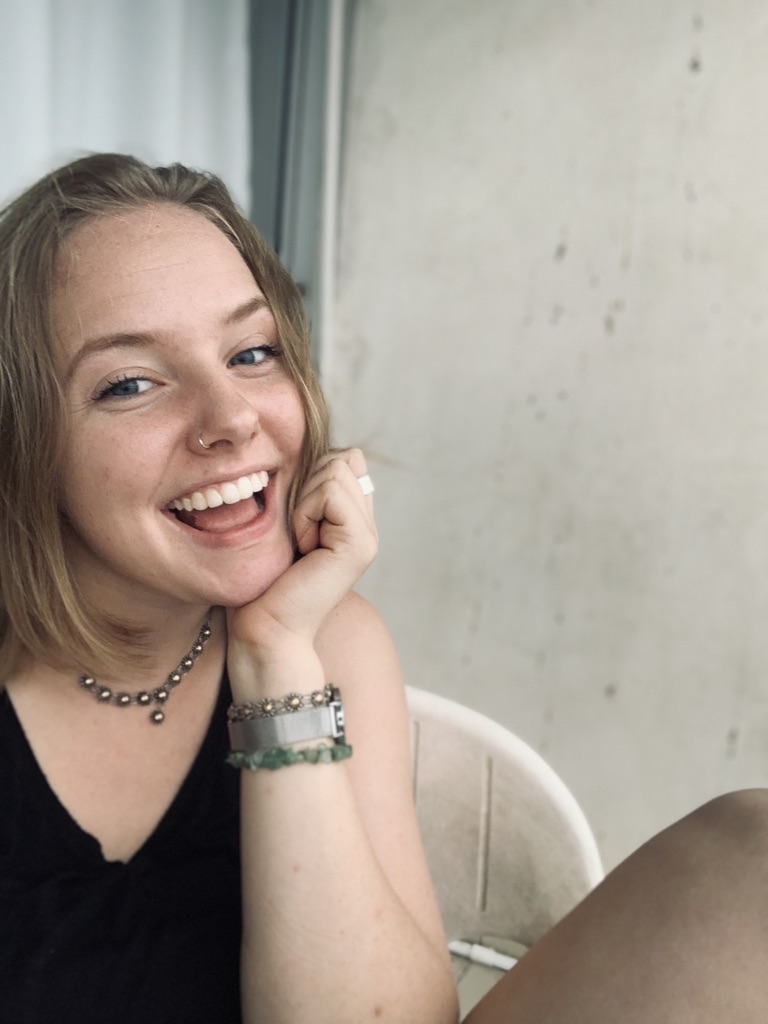
A couple other great things about this week:
I visited a coffee shop called Bike and Bean near North Beach in Durban and it was so cute. It’s right on the beach, has really good coffee, and rents bikes out to people to bike along the beach front.
If you know me, you know cooking for myself again has been really fun. We make family dinners in the apartment, light candles, and sit around the table together. Experiencing things alongside people and talking about it all is really important. I’m going to miss these friends when my program is over!
A not-so great thing: my phone got stolen on Thursday, so Facebook is going to be a better way to get in touch with me. The four awesome interviews I had so far were on my phone, so that’s frustrating. But, I’ll make up for it and keep pushing through! “Stubbornly optimistic” isn’t a new vibe for me, and it’s out in full force this week.
 Isabel's Semester in South Africa Fall '19